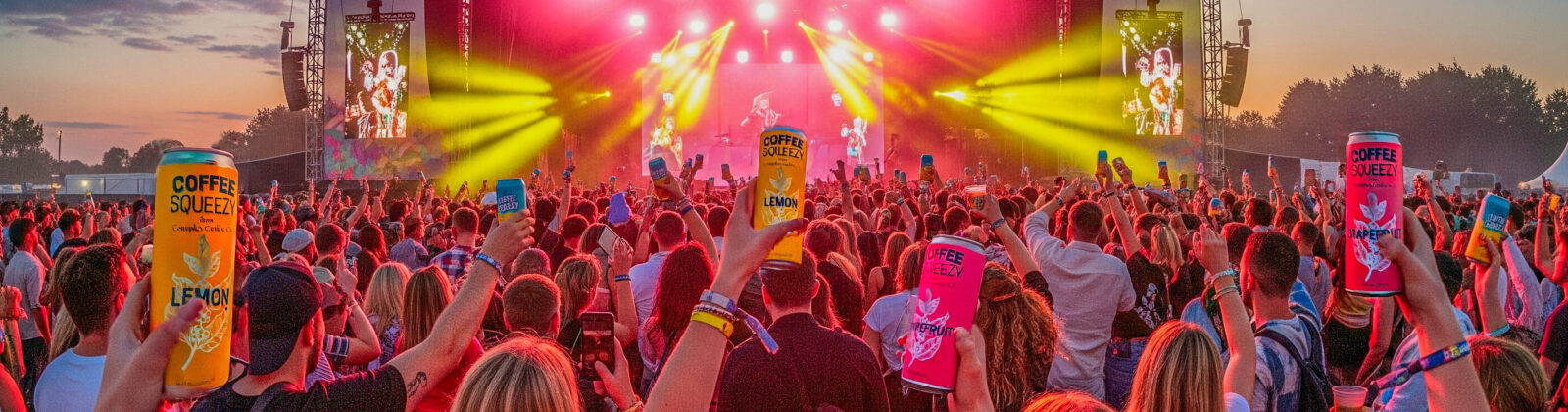
At Complex Beverage Co., we believe great coffee should be complex in flavor but simple in purpose. When people ask how we transform specialty beans into the refreshing drinks in our colorful cans, the answer lies in our commitment to doing things the right way—even when that means taking the harder path.
Our Sourcing Philosophy: Coffee with a Face, Place, and Name
I’m a coffee nerd, and in my world, there’s something that separates truly great coffee from the rest: if your coffee doesn’t have a place, a face, and a name, it’s likely extractive, commodity-grade coffee. That’s why every bean we use comes with a story.
Take our Colombian coffee, sourced directly from Bayron Arcila Lopez’s farm El Vergel in Sonsón. Bayron isn’t just a supplier—he’s a partner who shares our vision for exceptional coffee. His farm sits at 1,880 meters above sea level, where he grows Colombia and Castillo varieties with meticulous care. Bayron is also a youth leader in his community, inspiring the next generation of coffee farmers to embrace education, innovation, and sustainable practices.
For our Coffee Squeezy line, we work with Ethiopian farmers who grow beans with naturally bright, fruity characteristics that complement citrus flavors perfectly. These direct trade relationships aren’t just good for our conscience—they’re essential for quality. When farmers receive fair compensation and have long-term partnerships, they can invest in practices that produce exceptional coffee.
The Science Behind Our “Hot Brewed, Flash Chilled” Method
Here’s where the magic happens, and it’s not complicated—just complex in the best way.
While many ready-to-drink coffee companies use cold brew methods, we’ve chosen a different path. Our signature approach is “hot brewed, flash chilled,” and there’s real science behind why this matters.
Hot Brewing vs. Cold Brewing: The Chemistry
When we hot brew our coffee, we’re extracting compounds that cold brewing simply can’t access. Hot water (194°F to 205°F) quickly extracts the organic acids that give coffee its bright, complex flavors—those fruity notes in our Ethiopian beans that make the citrus pairing so natural. Hot brewing also captures more aromatic compounds, resulting in a fuller, more nuanced flavor profile.
Cold brewing, while smooth and mellow, extracts fewer of these bright acids and aromatic compounds. The result is often one-dimensional compared to the complexity we achieve with hot brewing.
The Flash Chill Advantage
Here’s our secret: we brew a concentrated coffee using hot water, then immediately flash chill it over ice. This process locks in all the complex flavors and aromatics from hot brewing while giving us the refreshing, cold beverage our customers want. Think of it as capturing lightning in a bottle—we get the best of both brewing worlds.
The flash chill process also helps preserve the coffee’s natural sweetness, which is why our drinks taste “shockingly good” without artificial flavors or excessive sugar.
Small-Batch Roasting: Where Craft Meets Scale
I roast all our coffee beans myself in small batches at home in Wisconsin. Yes, you read that right—I’m literally in my basement for hours, carefully monitoring each batch to ensure every bean reaches its peak potential.
Small-batch roasting (typically less than 100 pounds per batch) gives us control that large-scale operations simply can’t match. I can adjust temperature and timing in real time, responding to how each specific batch of beans is developing. It’s both an art and a science—I rely on the color, smell, and sound of the beans to determine the perfect moment to stop the roast.
This hands-on approach means I can highlight the natural characteristics of each origin. The Ethiopian beans get a roast profile that emphasizes their bright, fruity notes, while our Colombian beans are roasted to bring out their caramel sweetness and chocolate undertones.
Is it more work? Absolutely. But when customers tell me our coffee is unlike anything they’ve tasted before, I know those hours in the basement are worth it.
Our Honest Take on Packaging and Sustainability
Let’s talk about something most brands gloss over: our current packaging isn’t perfect, and we’re honest about that.
Right now, our cans use adhesive labels, which means they’re not fully recyclable. The aluminum can itself is infinitely recyclable—one of the most sustainable packaging materials available—but those adhesive labels create complications in the recycling process.
Here’s our commitment: once we hit our sales threshold, we’re transitioning to digitally printed cans that are fully recyclable. This isn’t just marketing speak—it’s a real plan with real timelines. We’re balancing the realities of starting a small business with our values around environmental responsibility.
Why choose cans at all? Aluminum offers superior protection against light and oxygen, which preserves our coffee’s flavor far better than plastic bottles. Plus, aluminum cans use 95% less energy to recycle compared to producing new aluminum, and they can be recycled infinitely without quality loss.
Quality Control: Where “Complex, Not Complicated” Lives
Our quality control process is straightforward but rigorous. Every batch of coffee gets cupped and tasted before it goes into production. We maintain detailed records of each roast profile, brewing parameters, and final product characteristics.
The beauty of our small scale is that I personally taste every product that leaves our facility. If it doesn’t meet my standards as a coffee nerd, it doesn’t get our label. This isn’t feasible for massive operations, but it’s exactly why our customers consistently describe our products as exceptional.
Looking Forward: Scaling Without Losing Our Soul
As we grow, the challenge is maintaining these quality standards and ethical practices at larger volumes. We’re already working on solutions: partnering with like-minded roasters for overflow capacity, expanding our direct trade relationships, and preparing for that transition to fully recyclable packaging.
The goal isn’t to become the biggest coffee company—it’s to prove that you can scale a business while maintaining uncompromising quality and ethical standards. Every can that bears the Complex Beverage Co. name represents this commitment.
When you crack open one of our cans, you’re not just getting a convenient caffeine fix. You’re getting coffee that started with a farmer who cares, was roasted by someone who obsesses over quality, and was crafted using methods that preserve every complex note we worked so hard to develop.
That’s how we keep coffee complex, not complicated.
Want to learn more about our sourcing practices or have questions about our process? Reach out to us or follow us on social media for behind-the-scenes looks at our roasting process.